Cambodia is racing toward a clean energy future. With ambitious targets to reach 70% clean electricity by 2030 and put 770,000 electric vehicles (EVs) on the road, the country is making a bold move for climate action, energy security, and economic competitiveness.
But with every solar panel installed and every EV battery charged, a new challenge quietly builds. What happens when these technologies reach the end of their life? And how does clean energy fit into the country’s current waste landscape?
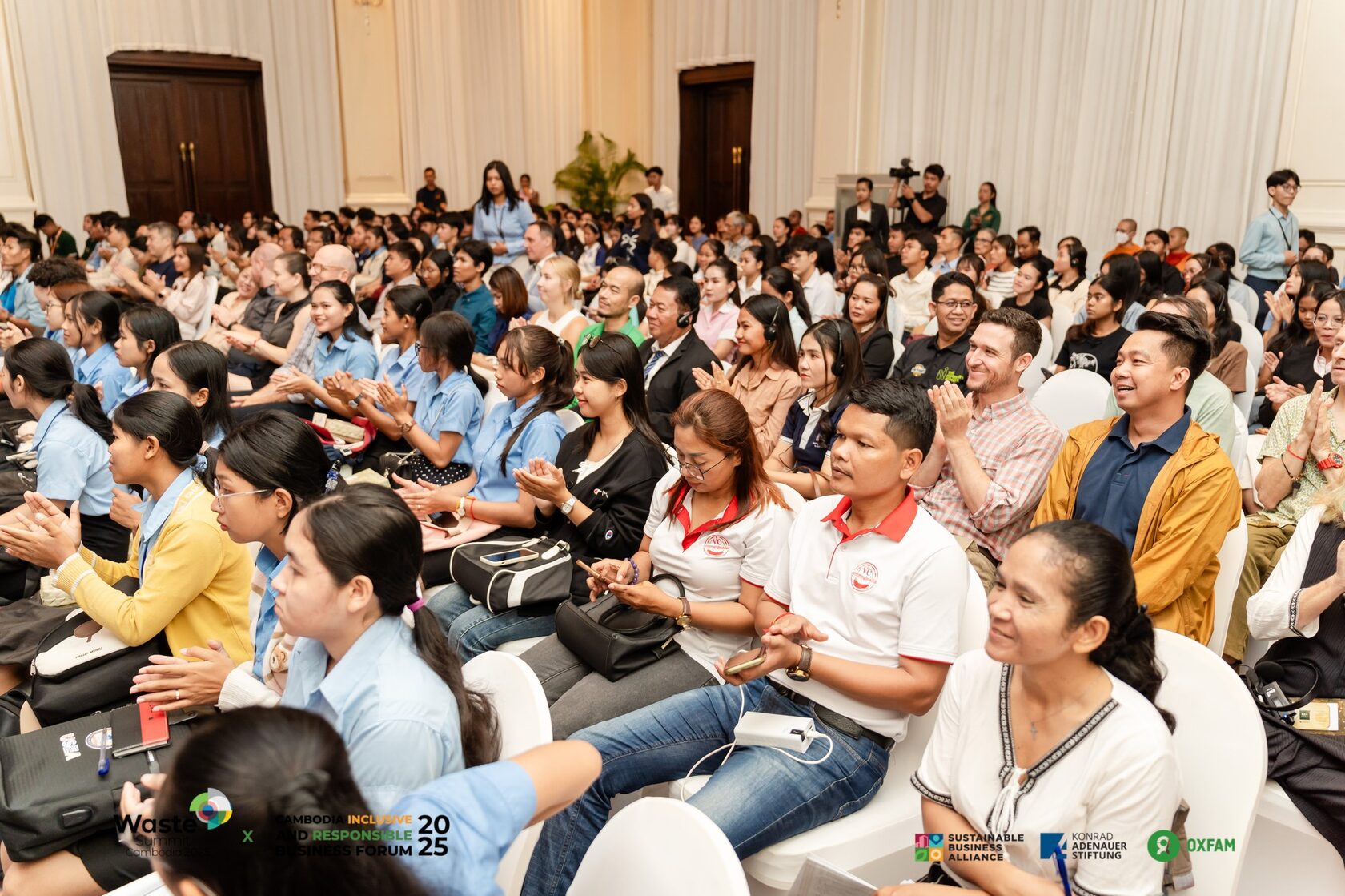
EnergyLab’s recent report, “End of Life Product Management Report,” was officially launched at the KAS Waste Summit 2025 in Siem Reap, with more than 500 attendees. The session was attended by key government counterparts, regional leaders, innovators, development partners, SMEs, and policymakers, with the overarching goal of exploring and showcasing cutting-edge solutions in waste management, the circular economy, sustainable supply chains, inclusive business models, and cross-sector collaboration.
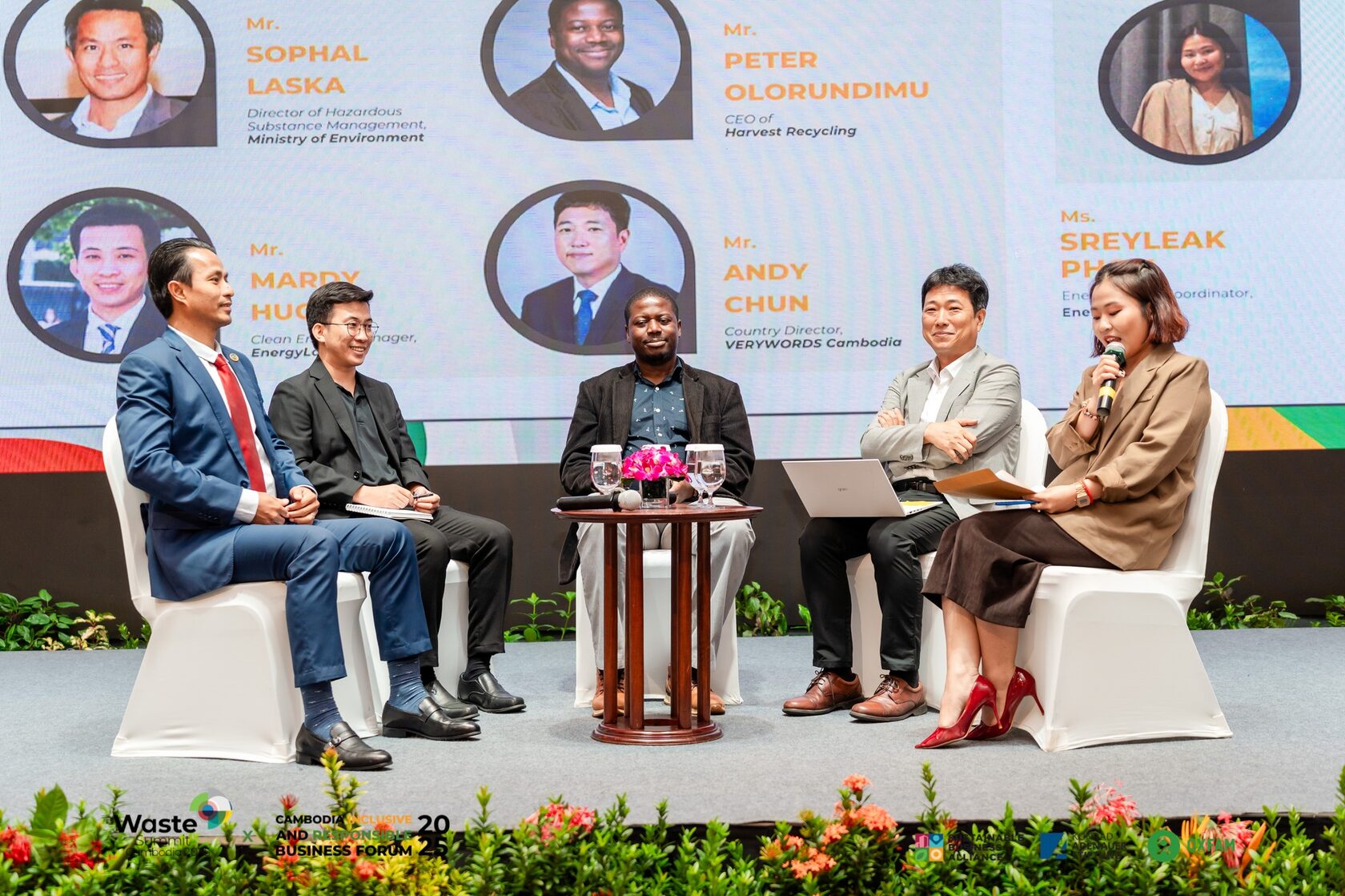
At the summit, our Clean Energy Policy Manager, Mr. Mardy Hout, joined a panel titled “Innovative Waste Solutions” and presented key findings from the report. EnergyLab also had the opportunity to invite Mr. Sophal Laska, Director of Hazardous Waste Management, the Ministry of Environment, to join alongside other key experts in the area on the panel, Mr. Andy Chun (VeryWords Cambodia), and Mr. Peter Olorundimu (CEO of Harvest Recycling).
What did the report find?
Throughout the panel discussion session, one idea resonated across the room: harnessing the potential to unlock value from waste. Effective management of electronic and clean energy waste not only mitigates environmental and social impacts but also generates new economic opportunities, everything from recycling industries to green jobs to innovative product design.
From the report, we found that today, waste from solar panels, EVs, and battery storage systems makes up just 1.8% of Cambodia’s total e-waste. However, as Cambodia accelerates its clean energy transition to enhance energy security, competitiveness, and long-term strategic economic growth, the amount of clean energy waste is expected to rise slowly, with the share of clean energy in e-waste increasing to 7 to 9.5%.
This is still relatively small within the broader context of e-waste, but it demands attention. Our research clearly showed that the environmental, social, and economic benefits of the clean energy transition outweigh the challenges. The growth of waste from clean energy shouldn’t be a reason for delay, but an opportunity for the country to get ready.
So how do we get ready? Our research highlighted the need for:
- Early Planning
- Robust polices
- Strong commitment
- Cross-cutting collaboration between stakeholders
As Cambodia’s clean energy sector expands, driven by EVs, the solar industry, and, to a lesser extent, BESS, e-waste generation is expected to rise after 2040. This increase will create both a responsibility and an opportunity to improve national and regional e-waste management systems. Instead of hindering the clean energy transition, this forecast highlights the importance of preparing for future waste flows to create a more resilient and effective e-waste ecosystem for the country. We have developed a strategic framework for coordinating CE e-waste management in Cambodia through two distinct scenarios based on modelling results and ASEAN benchmarks, which aimed at enhancing overall e-waste management in the country.
Short to Mid-Term - local collection & export for recycling (Before 2040)
- Prioritise repair & refurbishment before exporting remaining CE waste to be recycled
- Create local jobs and develop expertise (e.g., dedicated TVET Programs) in diagnosing and reusing CE waste
- Boost the second-hand market for PV panels and lithium-ion batteries
Long-Term - local collection & recycling (After 2040)
- Establish local recycling facilities with strong legal frameworks
- Collaborate regionally to secure feedstock for recycling
Turning these into a reality won’t happen overnight. It requires proactive discussions, synergies across ministries along with the private sector, development partners, and the clean energy communities that are involved in the ecosystem. If done right, Cambodia has the opportunity to reorganise the waste landscape in a way that is sustainable, circular, and economical for the country.
The discussion was guided by our Energy Policy Coordinator, Ms.Sreyleak Phon, through the exploration of one central theme: waste is not just a problem - it is a potential opportunity.
The full report could be accessed through this link or the QR code below.
Scan to access the full report

Appreciation to our organising partner
We extend our sincere appreciation to the organisers for hosting such a meaningful and impactful event