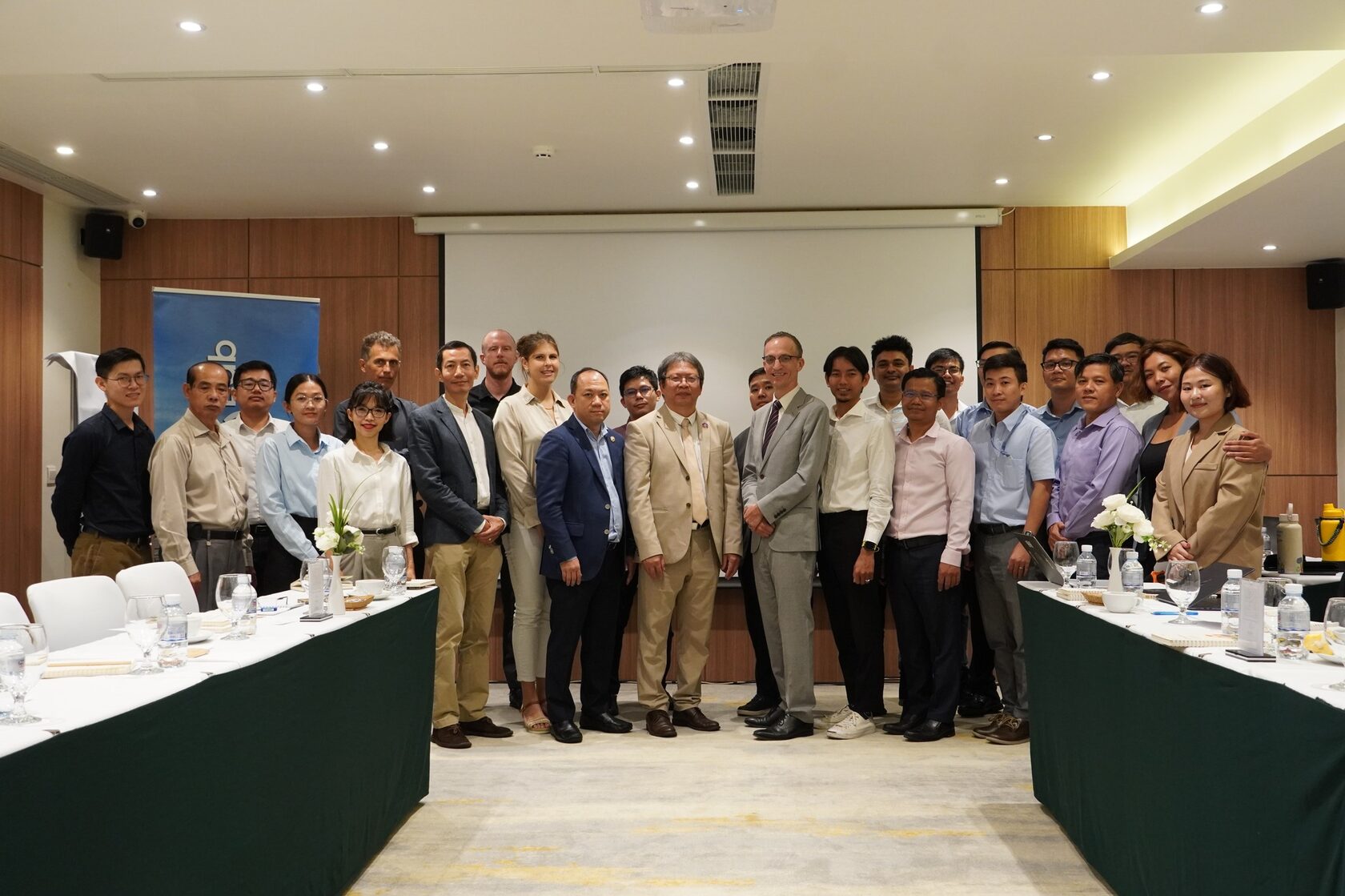
On August 21st, EnergyLab Asia hosted its first — and very engaging — Development Partner (DP) Roundtable on Energy Efficiency (EE) and the Building Energy Code (BEC) in Cambodia.
Energy efficiency means using less energy for the same outputs, while the Building Energy Code (BEC) helps ensure that buildings are designed to be energy-efficient, consume less energy, cost less to operate, and generate lower greenhouse gas emissions.
The roundtable deepened understanding of Cambodia’s EE and BEC landscape, showcased progress, and explored opportunities for collaboration between development partners and government counterparts — particularly Ministry of Land Management, Urban Planning and Construction (MLMUPC, and NCBTR), Ministry of Mines and Energy (MME), and Ministry of Industry, Science, Technology & Innovation (MISTI).
Through this open dialogue, partners shared initiatives, clarified priorities, and discussed how to maximise synergies while avoiding overlaps — paving the way for stronger, more coordinated action.
A big thank you to all DP representatives, including those joining online, as well as colleagues from academia and ministries, for your active participation and valuable contributions.
Energy efficiency means using less energy for the same outputs, while the Building Energy Code (BEC) helps ensure that buildings are designed to be energy-efficient, consume less energy, cost less to operate, and generate lower greenhouse gas emissions.
The roundtable deepened understanding of Cambodia’s EE and BEC landscape, showcased progress, and explored opportunities for collaboration between development partners and government counterparts — particularly Ministry of Land Management, Urban Planning and Construction (MLMUPC, and NCBTR), Ministry of Mines and Energy (MME), and Ministry of Industry, Science, Technology & Innovation (MISTI).
Through this open dialogue, partners shared initiatives, clarified priorities, and discussed how to maximise synergies while avoiding overlaps — paving the way for stronger, more coordinated action.
A big thank you to all DP representatives, including those joining online, as well as colleagues from academia and ministries, for your active participation and valuable contributions.